
Stop Digging
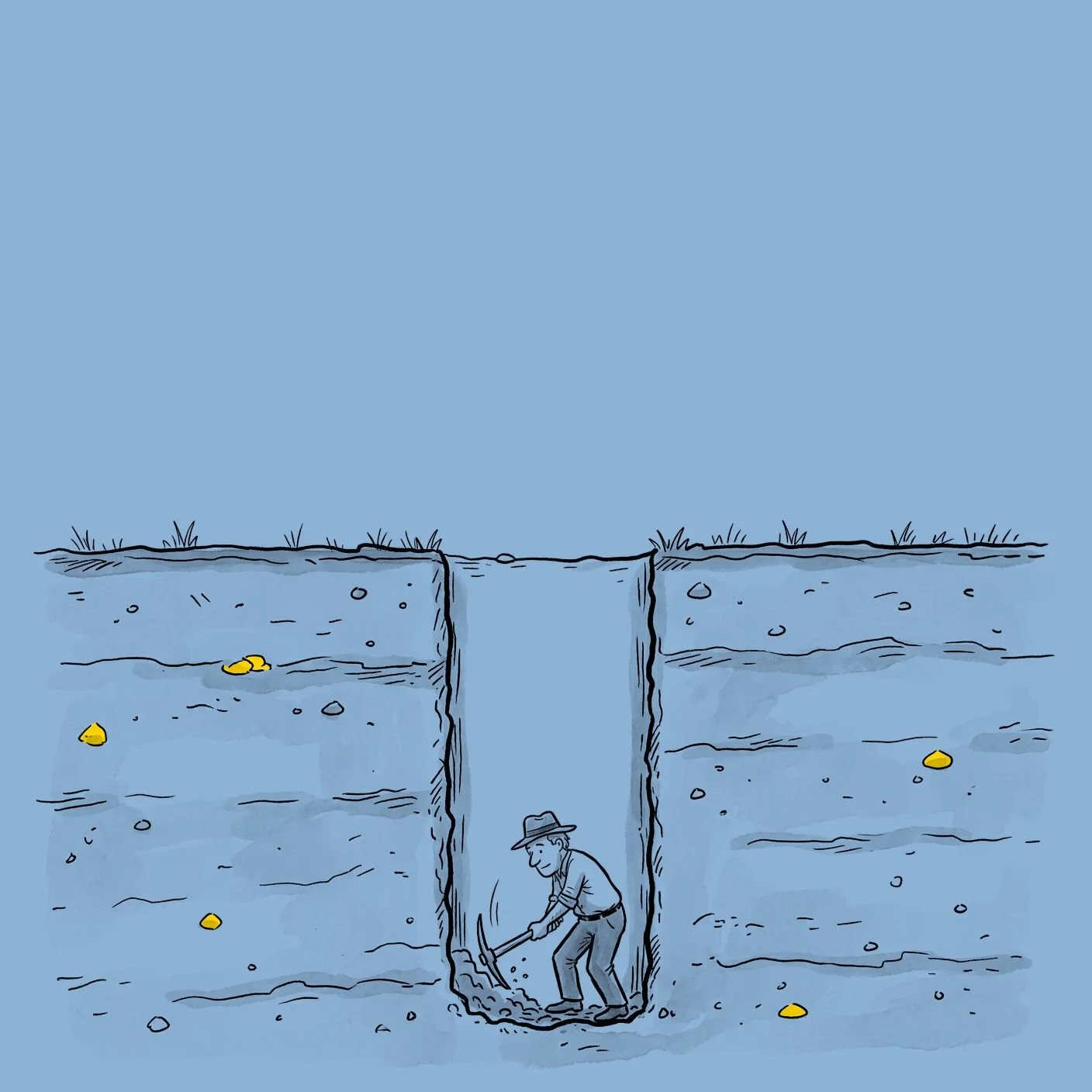
The basic shape of a turnaround is a "U." That's fine if you get sideways on your way to the park. You turn around and go back the way you came. But that's not exactly right for business turnarounds. Businesses can only move forward. There’s no going back in time. Once a business has stopped digging itself into a hole, what signals should investors look for to tell them “they’re digging themselves out?”
For Soitec, Lamplighter made the case that the medium and long-term prospects in Photonics products look good. That's the light you can see from the bottom of the dumb hole. But there's a lot of distance between the bottom and the exit. So, as the company finds its way back up, what are the things investors can expect to see in between?
Excavation
Soitec made a few classic semiconductor blunders. It embarked on a capacity expansion based on peak volume. It did that when demand had already started fading. It sprinkled in some ill-conceived M&A. It kept providing annual forecasts, then taking them back.
Growing in the wrong direction
The company has two manufacturing locations: Grenoble and Pasir Ris in Singapore. In 2021, it set out a plan to triple the company's capacity to serve the smartphone and EV markets. Both these markets tanked. They’re still struggling. The sites now suit a company churning out twice the volume.
It took too long, but it stopped digging. Capital spending dropped 40% last year. Going forward, investors should expect Soitec shifting capacity from its legacy RF business to its more promising photonics franchise.
To staff the ambition, Soitec increased headcount by 40%. It began pruning last year. Headcount fell by 5%. The company is offering voluntary buyouts for some employees to further right-size the staff. Investors should look for how many staff take the voluntary buyout and where the reductions occur. Soitec wrote-down its Singapore expansion the most. That signals the likeliest spot for cutting.
M&Aye Aye Aye
In the lead-up to the 2021 plan, Soitec acquired a clutch of companies that mostly didn't pan out. Its biggest bet was on Dolphin Design in 2018. It tried to move up the value chain and into chip design, not just chip materials. It took an impairment in 2025 and said that would be all. Then, it took another disposal charge right away. And then another one. More than the financial impact, the Dolphin debacle helped bury management's credibility.
Soitec hit paydirt with its photonics efforts. It developed that internally — no acquisitions. The company should stick to its knitting. Investors should be wary of any more acquisitions up or down the value chain and away from its core competency.
Uncredible
Prior management also went around with a song a dance to investors about guidance. Management said it would make the same in FY24 as in FY23 right up until the third quarter. It cut revenue guidance to -10% and earnings margin from 36% to 32%. It did the same thing the following year. "We'll earn stable revenue," said management. Then it cut late in the year to a "high single-digit" decline and weakening margins.
The guidance sinkholes finally did-in management. Soitec installed a new CEO and CFO. That crew abandoned annual guidance. They moved to a quarterly schedule. Since then, they’ve beaten it each quarter. This year, management also provided some broad guidance on revenue. At the start, CEO, Laurent Rémont & Co said it'd grow 30%. Now the team expects 50% growth.
Investors should look for tighter annual guidance going forward and a long-term vision for how the company progresses and a continued pattern of providing and meeting or beating quarterly guidance.
Up and out
So, uh, photonics does look like its doing well. 50% growth forgives a lot of sins. But we investors still want capital discipline. Investors don't want Soitec falling for the same traps again.
Soitec has been using its leading position in silicon photonics to sign customers to long-term capacity agreements. Not only is the business finding a path forward, its making sure it doesn’t fall into the same pit again. With more robust long-term agreements, management can more reliably assess demand. Closer partnerships with customers give management visibility into their levels of inventory. Features like these will keep the business from the same mistakes that got them here.
The company fell in a deep pit with capacity misadventures, dicey M&A and poor planning. It’s turned back upwards. As photonics takes the lead and mobile and auto find stability, the company's economics ought to improve dramatically. Its free cash flow and revenue have already stabilized. Margins should improve with higher utilization.
Its share price has taken some notice of this. It's up 5x from the beginning of the year. Given the disciplined approach to spending, the company looks like it will climb out of the pit with a far more durable and attractive franchise to investors than when it threw itself in. Given how low expectations for the company fell, this setup offers investors a compelling opportunity.
Disclaimer: None of this is investment advice. It's meant to illustrate ways LCM thinks about investing. Things that LCM decides are good investments for LCM and its clients are based on many criteria, not all of which are covered here. Some or all of LCM's ideas may not be suitable for other investors. LCM does not recommend investing either long or short any position mentioned. LCM may own positions in some of the companies mentioned. Some of its ideas will lose money — investing entails risk. See full disclaimer here.