
Warren Buffett bought See's Candies in 1972. Berkshire still owns it. It's a famously successful investment. Berkshire spent $25 million on it. It's returned billions. The See's brand was great. Profit margins were great. Customers were happy. It has about 250 chocolatiers across North America. The biggest challenge about the investment was what to do with all the money it was bringing in. It didn't scale. It couldn't open up an infinite number of stores. A specialty branded chocolate retailer only worked in certain spots.
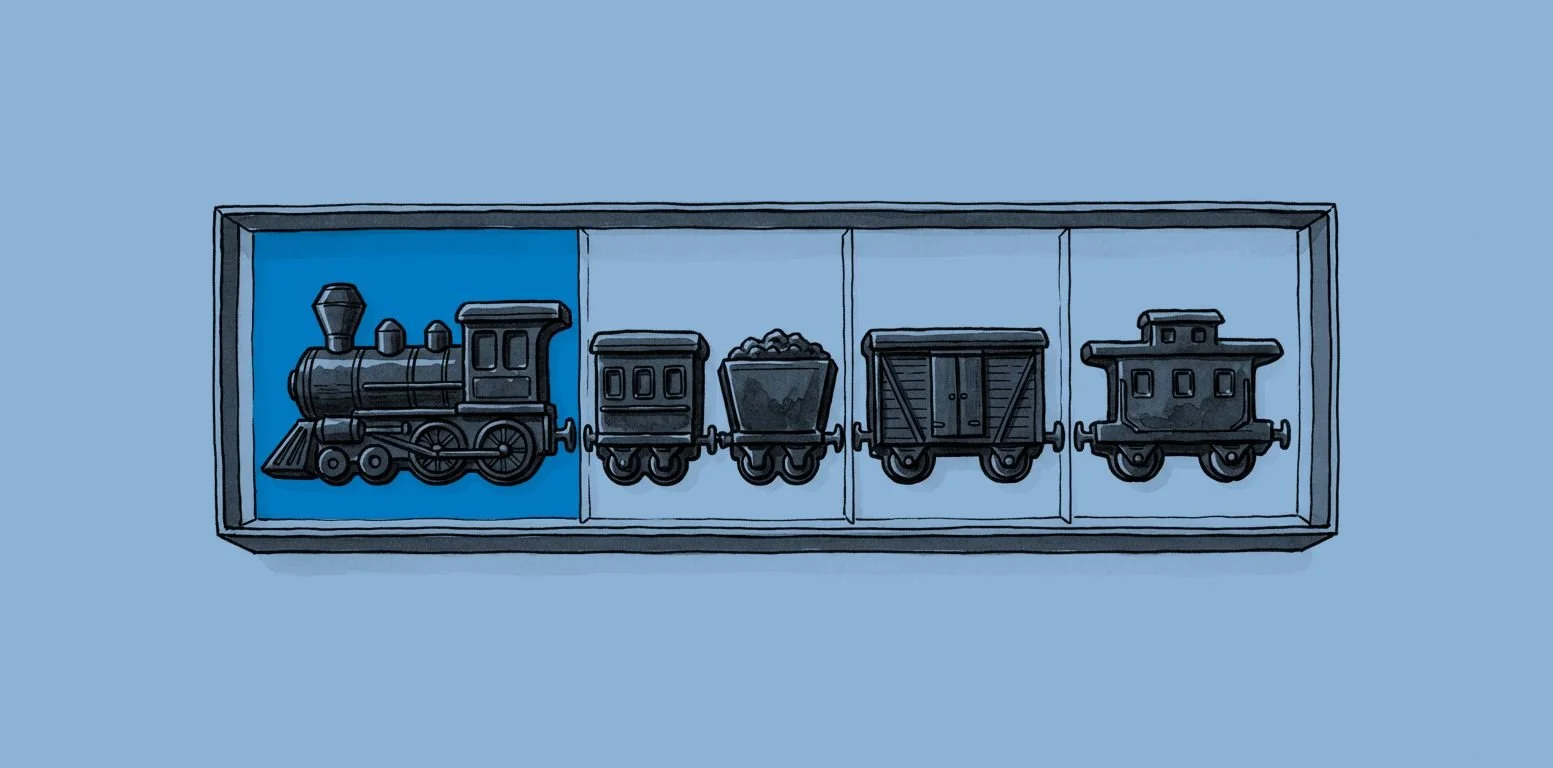
Warren, being Warren, had some ideas. Obviously after winning great success in a branded consumer-facing operation with massive margins, he decided to go with railroads.
Huh?
Berkshire bought BNSF in 2010. BNSF runs one of North America's largest freight rail networks. It moves things like consumer products, agricultural goods, coal, building materials from one place to another. It takes a lot of capital to build a rail network like BNSF's. Even with the capital, there isn't the land and right-of-way available to build anything new like it.
BNSF is about as different as a business could be from See's. Its most important point of differentiation, though, might be that it scales. Margins are tiny, but the pool of potential profit from moving stuff around is just much, much bigger. There are many more dollars of profit to earn in moving box cars than boxes of chocolate. Berkshire took the chance to earn more overall profit even though it meant earning lower profit per dollar of capital invested.
California Brittle
Here's ACM Research. It updated investors on November 5th. Lamplighter talked about how great its high-margin, high-customer loyalty semiconductor cleaning business is here. That's the company's main line of business. Lamplighter skipped over the part about how it was moving into making packaging kit for semiconductor manufacturing.
Management's outlined its legacy cleaning product pipeline addressing a $7bn market. Its newer packaging business aims at a $14bn market. Last year, that business was less than a third of the company's overall activity.
And its growing faster. Cleaning products grew 8% last year and a donut -- 0% -- this year. The packaging trade? That grew 36% in 2025. As the company's transition gained traction, its' steamed even faster. That side of the business grew 123% so far this year. ACM's packaging business will contribute more than half the company's activity by the end of 2026.
The trade-off is the same as See's and BNSF: margin. The drop-off is nothing so dramatic as from See's to BNSF, but there's more to invest in ACM's new businesses. ACM is expanding in China and opening a new research and manufacturing facility in the US to better serve customers and steer through national barriers. Its margins fell a bit compared to last year because of mix. The payoff is a much larger haul of profit dollars.
Scotchmallow
ACM Research has an impeccable franchise in semiconductor cleaning equipment. That market is boxed-in. The company can't recycle all the cash its making there back into that market, just like See's struggled to find more investments in checkerboard chocolate shops. ACM has branched out into much larger, but possibly lower margin and more capital-intensive businesses, ones with more profit to earn. So far, the returns look good and it looks like it's on track to a smooth transition.
Disclaimer: None of this is investment advice. It's meant to illustrate ways LCM thinks about investing. Things that LCM decides are good investments for LCM and its clients are based on many criteria, not all of which are covered here. Some or all of LCM's ideas may not be suitable for other investors. LCM does not recommend investing either long or short any position mentioned. LCM may own positions in some of the companies mentioned. Some of its ideas will lose money — investing entails risk. See full disclaimer here.