
The Great Wave
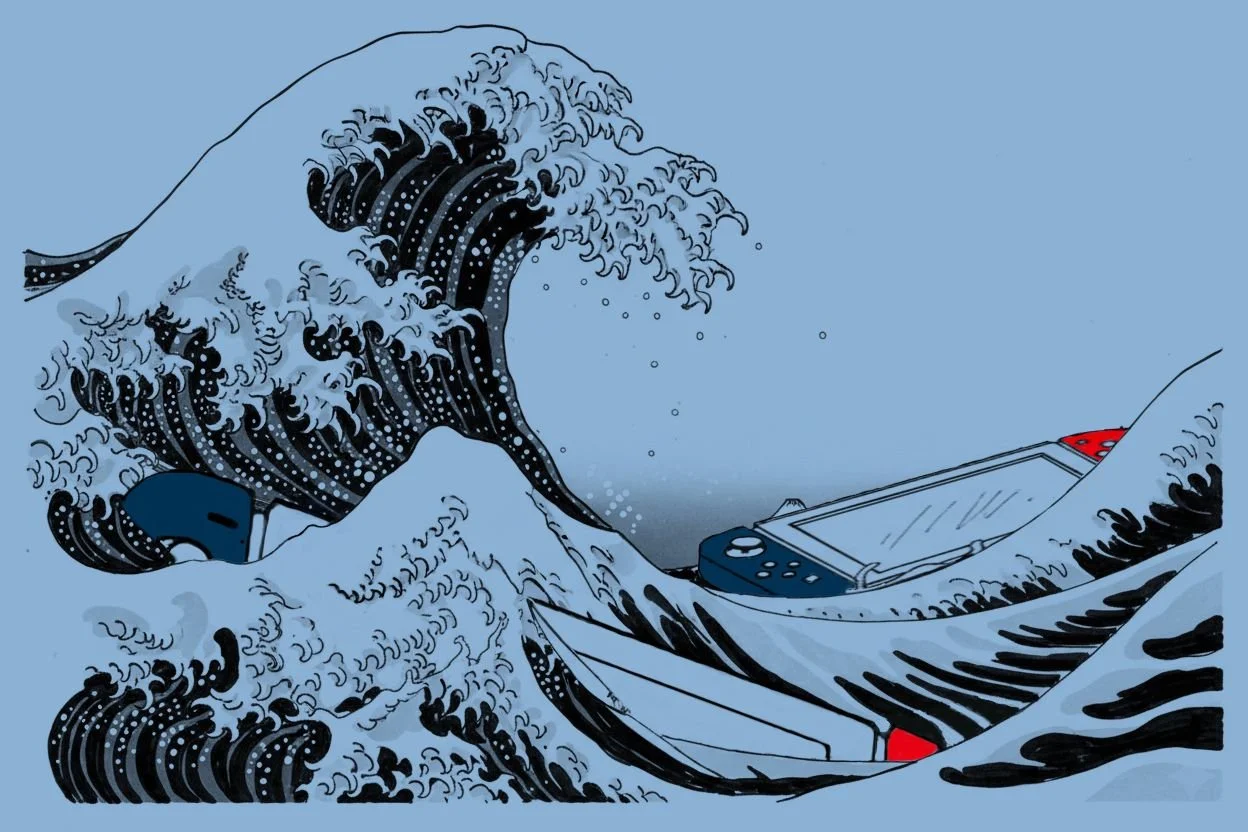
Artist Hokusai presented his prized work, Kanagawa-oki nami ura, The Great Wave, to the emperor of Japan in 1831. It was a masterpiece of artistic genius. It hung in the imperial palace as the greatest among great Japanese high art. It attracted noble visitors from far and…
Okay, that's not at all what happened. Publisher, Nishimuraya Yohachi paid Hokusai to make another version of an Ukiyo-e print he'd been making for 30 years. It was just one of many waves Hokusai made. Most of them were very similar. It wasn't for high art either. They made it to sell as kitsch to tourists, like you'd get a mini Statue of Liberty when in New York. It was more like Norman Rockwell painting ads for Coke than it was Van Gogh. The painting began and ended as a mass-produced commercial adventure. It's also good art.
The piece the world knows today riffed on Hokusai's long parade of waves. He obsessed over them. For this one, Hokusai borrowed a few elements new to Japan but that had been around in other parts of the world for years. He used linear perspective from European art and used Prussian Blue pigment from Berlin. Using existing techniques in new ways for a new audience carried Hokusai's work to become an icon. Using old techniques in new ways became the slogan for another of Japan's great commercial success stories.
Consolation prize
West from Edo, on the other side of Mount Fuji, Nintendo has been running this playbook with its gaming consoles. It adopted the mantra "withered technology, lateral thinking." Its kit never relied on the latest tech. It borrowed tech developed for other purposes and used it in new ways. The Game Boy released in 1989 was basically a fancy calculator without numbers. It used the tools available in clever ways to produce compelling consumer experiences.
Consumer product cycles work in waves too. Some of them are great. Nintendo's most recent great wave, The Switch, began to swell when it launched in 2017. It crested during COVID-19, when everyone was couped-up at home. It's been lapping onto the beach since, selling 11 million units last year compared to 29 million at its height. It might sell around 4 million units this year. The eight-year wave delivered about $45bn of value to Nintendo.
Nintendo looks to keep that train going with the launch of the Switch 2 last year. Like Hokusai borrowing influence from the Dutch and blue from Berlin, Nintendo borrowed some features from other console makers to boost the value of its new product.
It introduced social gaming and game portability. Players can now race Mario Kart with friends and family who aren't in the living room. Gamers can now port their progress rescuing Princess Zelda from their original Switch onto the new box. Rather than starting this new product wave from scratch, Nintendo gamers are a bit more tied in to this generation with switching costs and network effects.
These are old lessons. Social mobile gaming has been around for 20 years. Remember Farmville? In consoles, PlayStation and Xbox have locked their gamers in with backwards compatibility for years. It's shocking Nintendo has gotten away without having these features for this long.
The upshot is that each Switch 2 console ought to deliver more value to Nintendo than the original Switch. Even discounting the bump COVID-19 gave to the original Switch, that console still delivered about $40 BN in value to Nintendo.
Wave goodbye
Nintendo priced the Switch 2 higher by 50%. It looks like it will sell at least 50% more units than the original in its first full year on the market. Based on the early returns, that'll catch about 40% more value over the lifetime of the console. That's more value than the price of Nintendo today. That doesn't give any credit for gamer lock-in with the new features. It doesn't give any credit for any value after the Switch 2. Its withered stock price makes Nintendo look like a wave worth catching.
Disclaimer: None of this is investment advice. It's meant to illustrate ways LCM thinks about investing. Things that LCM decides are good investments for LCM and its clients are based on many criteria, not all of which are covered here. Some or all of LCM's ideas may not be suitable for other investors. LCM does not recommend investing either long or short any position mentioned. LCM may own positions in some of the companies mentioned. Some of its ideas will lose money — investing entails risk. See full disclaimer here.