
Van Go
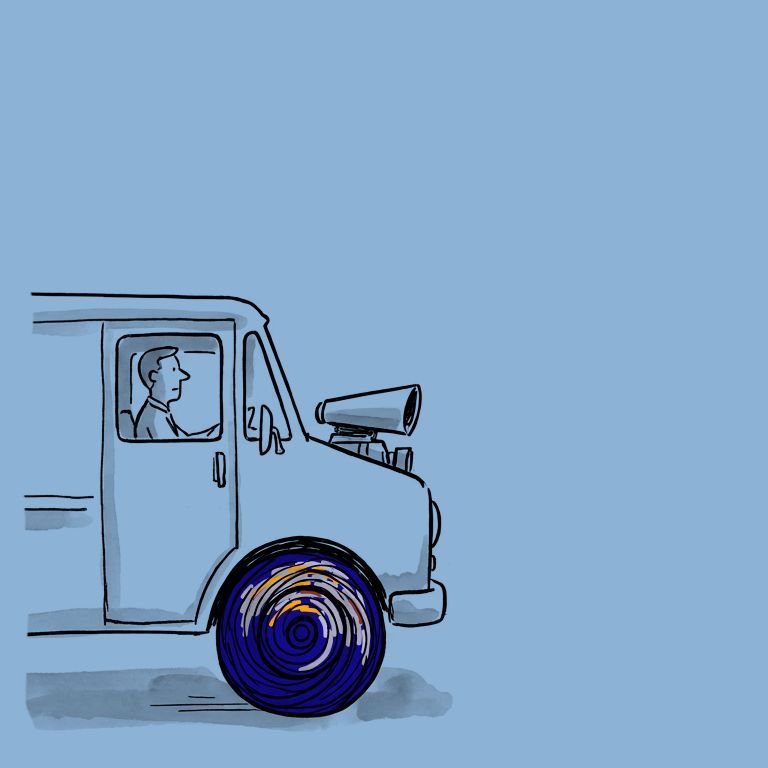
Vincent Van Gogh came to painting late. He failed as a teacher, a preacher and an art dealer first. He dabbled but didn't commit to the bit until he was 27. From there, it took another seven years before he found his signature swirls. And that happened only after he checked into the Saint-Paul Asylum. That's where he stroked the luminous eddies of Starry Night. His whole painting career lasted just a decade. The flowing, tumbling pieces for which the world knows him best came just from the last two.
Like Van Gogh, Garrett Motion's business is making a late-life pivot to swirls.
Self-portrait with a Bandaged Ear
Garrett makes turbos — things that boost power to cars, trucks and things that go. In case you've missed it, the world's been pivoting to electric. EVs don't have exhaust to drive turbos. And the car market as a whole hasn't been doing great. The US market sold more cars 10 years ago than it does today. Garrett's future posed some uncomfortable questions. These trends have been simmering for a while. Tesla's Model X debuted 11 years ago - longer than Van Gogh's painting career.
Garrett Motion held its Investor and Technology Day earlier this year. Its last Investor and Technology Day happened three years ago. At that event, Garrett sketched its future as serving the electric passenger vehicle dream. By 2030, it expected nearly 40% of its revenue would come from zero-emission solutions moving EVs. Garrett grew up as a turbo company. That idea made sense.
That market is still there. And Garrett will still serve it. But since then, other, more attractive markets have entered the picture. Garrett shifted its strategy to adapt.
Irises
The hard part about building Turbos is that they spin really fast and need really precise balance. They fail with lax engineering or low-quality manufacturing. Their benefit is delivering more power. Customers who value power benefit the most. People driving hybrids around town certainly enjoy lower gas bills, but the ones that really notice their value are the ones keeping an eye on delivery van margins or constantly-running mining trucks or trains. So, Garrett pivoted its focus towards commercial and off-highway vehicles. It expects these to be bigger business than it thought they’d be in 2023.
Sunflowers
It's also found a few other spin-curious customers. Trane is using Garrett's solutions in its HVAC products. Ingersol Rand is using Garrett's kit in air compressors. Both those uses need "fast spinning things." At the very high end, there aren't many choices to engineer oil-free, fast-spinning rigs. Garrett does it best.
The shift connects Garrett to new, stronger customers who place value on performance. The move diversifies the company away from vehicles and layers-in stronger end-user growth - the need to cool things. Lamplighter's talked before about the importance of delivering value to customers. It’s also talked about catching companies as they return from challenging adventures as new, better versions of themselves.
Saint-Paul Asylum
The last big change from 2023 is Garrett's core turbo market. Its bigger. The bumps hit by the electric transition have improved Garrett’s prospects there. The shop originally thought its core market would begin declining in 2027. In its 2026 update, management makes the case it'll do the same amount of turbo business in 2035 as in 2027. And that amount of business is going to be bigger than it thought it would be from its 2023 expectations.
Lamplighter’s talked about the difference in value to investors between a fading business and one that’s just treading water.
The Starry Night
Garrett's broadened its ambitions from a "turbo and EV" company to an "auteur in things that spin really fast." This expands its economic canvas. It's begun to diversify its business into industrial applications with strong customers and focus on more attractive vehicle applications. Management paints a picture of a stronger turbo business for longer than expected. This shift won’t produce meteoric growth. Management says it'll do 5% through 2035 — not turbo. But it'll combine that with strong cash flow generation, shrinking share count and generally more favorable valuations for niche industrial companies than car components ones and investors could enjoy vibrant returns.
Disclaimer: None of this is investment advice. It's meant to illustrate ways LCM thinks about investing. Things that LCM decides are good investments for LCM and its clients are based on many criteria, not all of which are covered here. Some or all of LCM's ideas may not be suitable for other investors. LCM does not recommend investing either long or short any position mentioned. LCM may own positions in some of the companies mentioned. Some of its ideas will lose money — investing entails risk. See full disclaimer here.